Oh, I’m sure you’ll agree with me on this – There’s no better way to grow a business than by having customers tell their friends, family, and peers about your product.
And as a matter of fact, getting users to sign up, then try your product, and finally, spread the word about it to others lies at the core of so many growth hacking strategies.
But here’s the catch – you can’t just expect your customers to remember about you all the time, let alone mention your product to the people they encounter every day, can you?
Of course not!
But you could build your product in a way, so they refer it every time they use it…

Oh yeah!
You can do this by implementing a strategy called viral loops right into your product.
And you know what, that’s exactly what I’m going to cover in this guide.
In this post, you’ll learn how to design and implement a viral loop that will help your eCard company grow with every new card your users send.
Plus, later in this guide, I’ll also show you some examples of how eCard and other businesses use viral loops to boost their growth.
Specifically, here’s what you’re going to learn:
- What is a viral loop and how does it work,
- The benefits of building viral loops into your product,
- How to calculate potential return of a viral loop,
- How to implement a viral loop to grow an eCard company,
- Dark patterns to avoid at all costs.
Sounds like exactly what you need to grow your eCard business? Then let’s get cracking.
So, What Exactly is a Viral Loop
I admit, practically every marketer you ask would offer their own take on the idea of viral loops.
Some would simply call it a strategy to grow a business through referrals. And although generic, the definition does sum up the core principle of a viral loop pretty well.
However, there’s a touch more to it…
For example, Justin Scott plays on the word viral, and explains it this way:
“Named after our friends the viruses, a viral loop is meant to infect a person and cause them to share it with other people.”
Andrew Chen offers an even more specific explanation, defining a viral loop as:
“The steps a user goes through between entering the site to inviting the next set of new users.”
But for me, the Josh Jeffryes’ definition hits the bullseye. He describes a viral loop as:
“A self-fueling action loop that drives users to create more users, which increase engagement and existing users.”
And that’s exactly what a viral loop does – it entices current users to help attract more customers.
In its simplest form, a viral loop works like this:
Step 1. A person discovers a new product,
Step 2. They use it,
Step 3. If satisfied with it, they tell a friend about it,
Step 4. The friend signs up and uses the product,
Step 5. Providing they’re enjoying the experience; the friend tells another person about it,
Step 6. They sign up to it, and the cycle continues.
Naturally, the above is just a simplified version of a typical viral loop. And as I’m sure you’ve noticed, it doesn’t pertain specifically to an eCard company.
However, I deliberately started with a more generic loop first, to help you understand the core principle behind it – getting a customer to tell others about a product.
Because, for the most part, the biggest differences between different viral loops isn’t the structure.
It’s how you entice users to go and learn about your product from a referral.
(And later in this guide, I’ll show you specifically how to design a viral loop that would work for an eCard company.)
But for now, though, let’s stick with discussing viral loops in more generic terms.
Why Should You Invest in Building a Viral Loop
The obvious answer is to grow, right?

But there’s actually much more to viral loops than that.
For one, using viral loops drives down the customer acquisition cost (CAC).
Let’s not beat around the bush here – getting new customers is expensive. So darn expensive, in fact, that its cost largely contributes to many companies demise.
As David Skok points (note, the emphasis in bold is mine):
“[…] after closely watching several hundred startups that have failed, I observed that a very large number of these had solved the product/market fit problem, but still failed because they had not found a way to acquire customers at a low enough cost.”
But what else to expect, when even the cost of running PPC ads on your very own branded keywords is growing like mad…
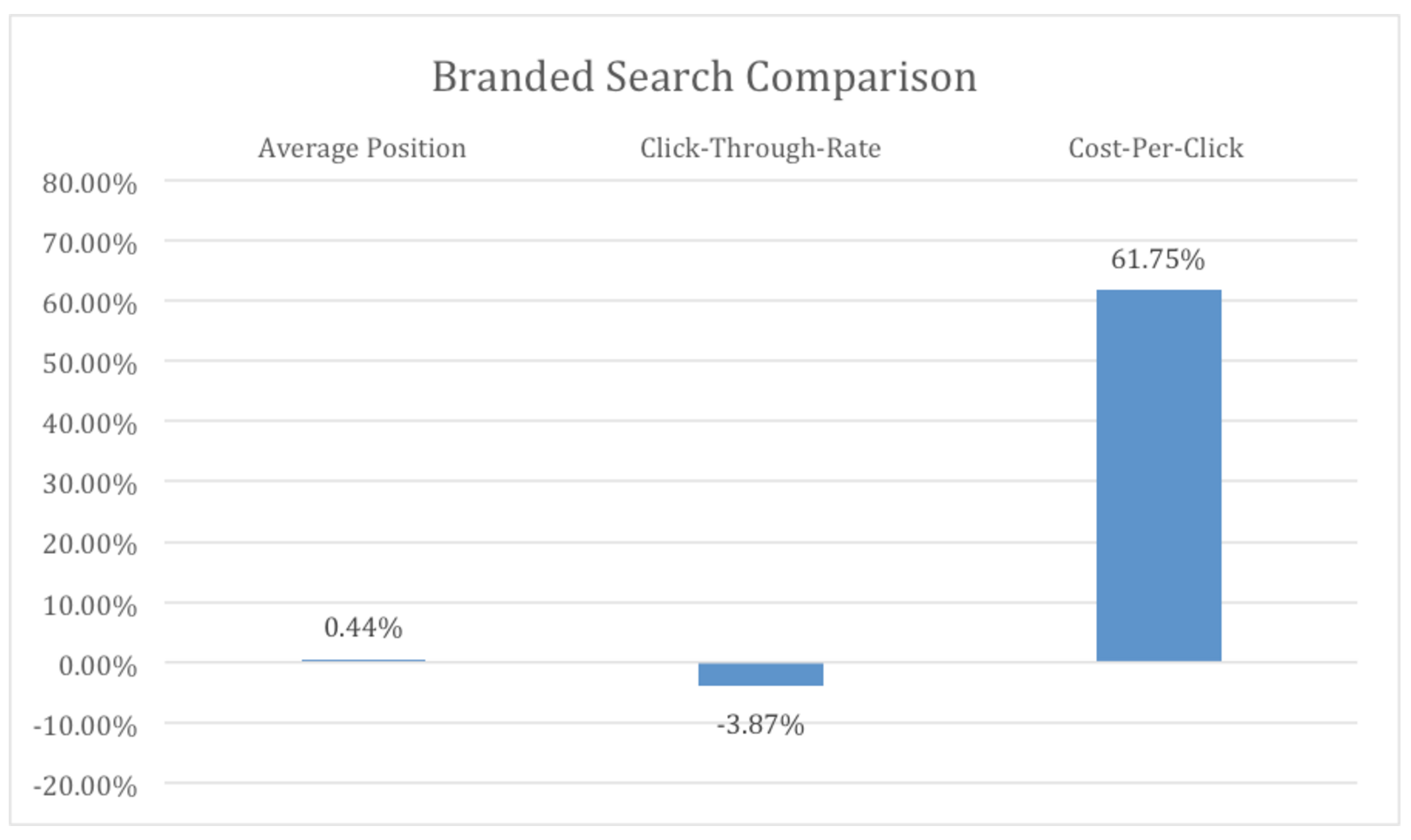
Viral loops, on the other hand, are cheap. Often, all it takes to launch them is just some initial technical implementation, and your referral engine is ready to roll.
Viral loops also help you promote your product via the most trustworthy source.
Year on year, research proves that friend recommendations remain the most trusted source of advertising.
Here, take a look at the example from the Nielsen Global Trust in Advertising Report:
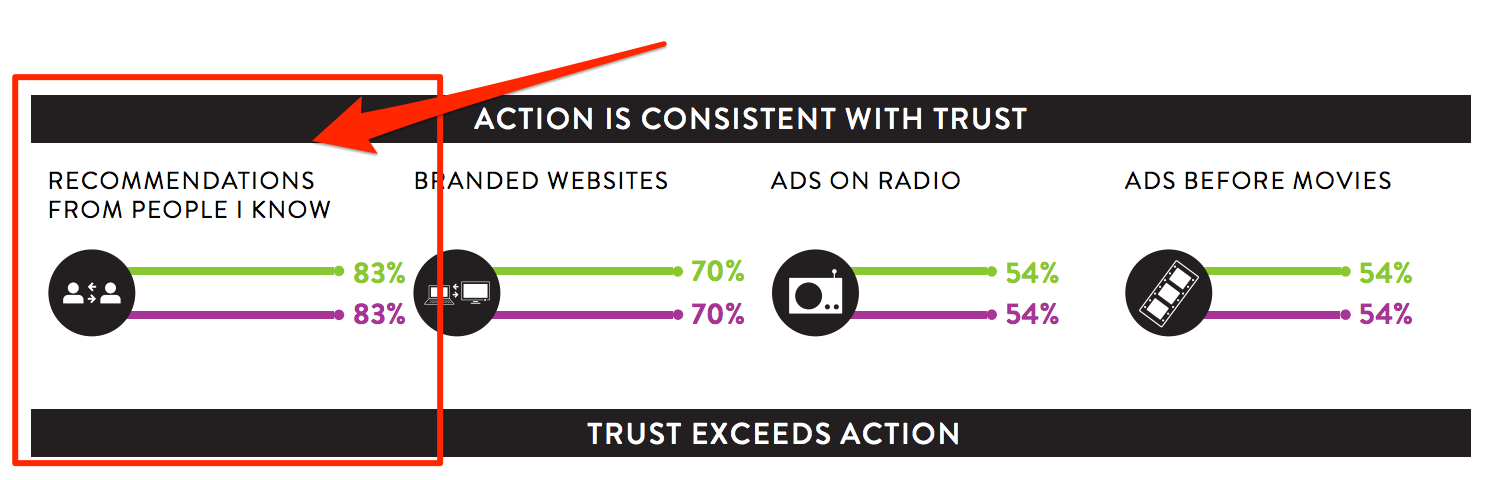
As it turns out, not only do we trust friend recommendations more than any other media but we also act on them.
And finally, Viral Loops boost growth on autopilot.
Time (or effort) is another factor that can greatly undermine your company’s growth.
After all, you can only grow if you manage to find a way to scale your efforts.
But having a system that achieves this practically on autopilot, means that your time investment in growth can be as low as zero.
But Could Viral Loop Really Help My Product Grow?
If, while reading this guide, you’ve been asking yourself:
“What if I build a viral loop and it won’t deliver the growth I need?“
“Is launching viral loops worth my time and effort?”
“How can I get a buy in to launch a viral loop from my boss?”
Then I’m sure you’ll be delighted to know that there are two formulas you could use to calculate the effect of a viral loop on your business.
How to Calculate Viral Coeffient
Formula #1:
VC = N x P1 x P2
I admit, at first sight, the formula might look intimidating but don’t worry, using it is actually incredibly simple.
But first, we need to understand what each of its components means. So, here it goes…
- VC – stands for “Viral Coefficient,” that’s the result of the equation, telling you what you could expect from the viral loop.
- N – this metric defines the average number of customers invited by any user who actively shares information about your product
- P1 – this variable describes the proportion of invited users who tend to sign up and become users themselves
- P2 – defines the number of active users who tend to invite other people.
To use the formula, simply extract relevant data for N, P1, and P2 and multiply them together to discover the potential of your viral loop.
And, as Justin Scott points:
“The value of VC will tell you how well your loop will grow, in the following manner:
- If VC is greater than 1, you can expect to see the growth of your viral loop increase exponentially into every area possible.
- If VC is less than 1, you’ll need to constantly monitor and remarket your content to keep it going.
- If VC is 0, you will see no growth whatsoever.”
Formula #2:
VC = x * y
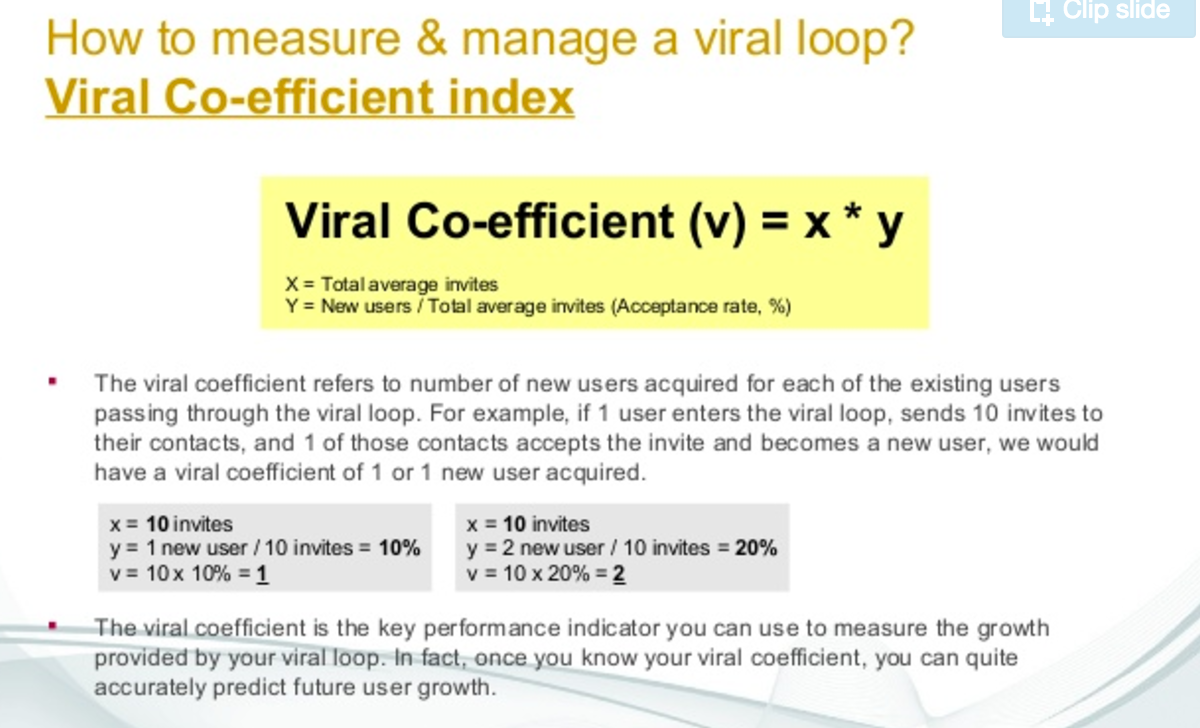
Again, let’s break this method down by components:
- You already know what the VC metric stands for. This is the result of your viral loop.
- X describes the total average invites you receive from a viral loop.
- Y defined new users generate through those invites.
As Adrian Teh describes the benefits of defining the VC:
“Once you know your viral coefficient, you can quite accurately predict future user growth.”
Pretty cool, right?
Before we discuss building viral loops for an eCard company, let’s look at one more thing:
Viral Loops in Practice
You already know what viral loops are.
You also know how they work, and what makes them such an incredible opportunity to boost your growth.
You even know how to calculate the potential growth through a viral loop, should you implement it.
But have you seen any viral loops in action?
Actually, I think you had but didn’t realize it. After all, that’s the key part of a viral loop – it helps customers recommend a product often without even knowing that they’re doing it.
So let’s go through some examples that explain in practice how viral loops help deliver growth.
#1. Hotmail Adding Self-Promotional Message to Every Email
Without a doubt, Hotmail’s growth story is the most popular example of a viral loop (and if I remember correctly, also one of the first instances of using a viral loop).
Launched in 1996, the company relied on traditional advertising – billboards and radio ads for growth.
And although these were different times, with traditional promotional strategies still bringing relatively good results, Hotmail founders knew that they need something else to grow beyond the first 20k users.
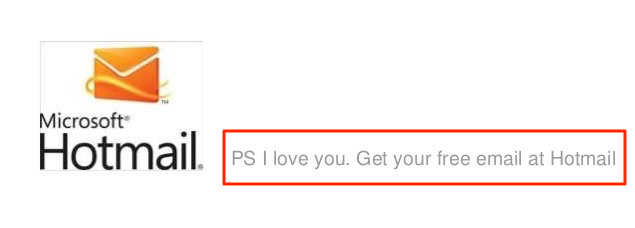
And their idea was simple – to add a single line of content at the bottom of each email. Like this:
“P.S. I love you. Get Your Free Email at Hotmail”
With this simple strategy, they leveraged their 20k users to spread the word on the product with every single message they sent.
Clever, huh?
And the result? The company’s user base grew to 1 million within 6 months of launching the viral loop.

#2. YouTube Leveraging MySpace Users to Grow
Remember MySpace? In 2005, the social network had 25 million users and a cult status.
But… it had a flaw. It made it almost impossible for users to embed videos on their profile.
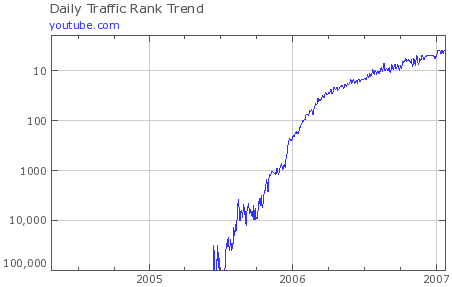
YouTube recognized the opportunity and launched an embed code allowing people to quickly present videos to their MySpace connections.
And how did it work for them, you wonder?
Well, see for yourself:
#3. PayPal Manufacturing Its Reputation on eBay
PayPal is the preferred payment option on eBay today. But that wasn’t always the case.
There was a time when PayPal struggled to become recognized as a viable alternative to other, more established payment options.
PayPal saw the opportunity in positioning the brand on eBay and struck a deal with the site to allow users to place the company’s logo among payment options. As a result, their symbol got featured among many reputable logos like MasterCard or Visa, boosting the company’s brand awareness and reputation.

#4. Facebook Badges
It’s hard to believe that Facebook would have ever faced a growth challenge.
But there was a time when the company was failing to meet its growth goals.
One way to combat the problem the social network introduced was a set of badges users could embed on their websites and blogs, linking their visitors to their Facebook page.
And according to Forbes (again, the emphasis in bold is mine):
“… these widgets served billions of impressions per month, which led to hundreds of millions of clicks and consequently millions of signups. By extending Facebook through the user base, Facebook was able to generate a massive number of sign ups.”
#5. Dropbox Referral Program
According to Drew Houston, the company’s founder and CEO, the company battled growth until they realized that a typical user:
“[…] doesn’t wake up in the morning, wishing they didn’t have to carry a USB drive, email themselves, etc.” (source)
Instead, they learn about a solution like Dropbox from a friend or another connection.
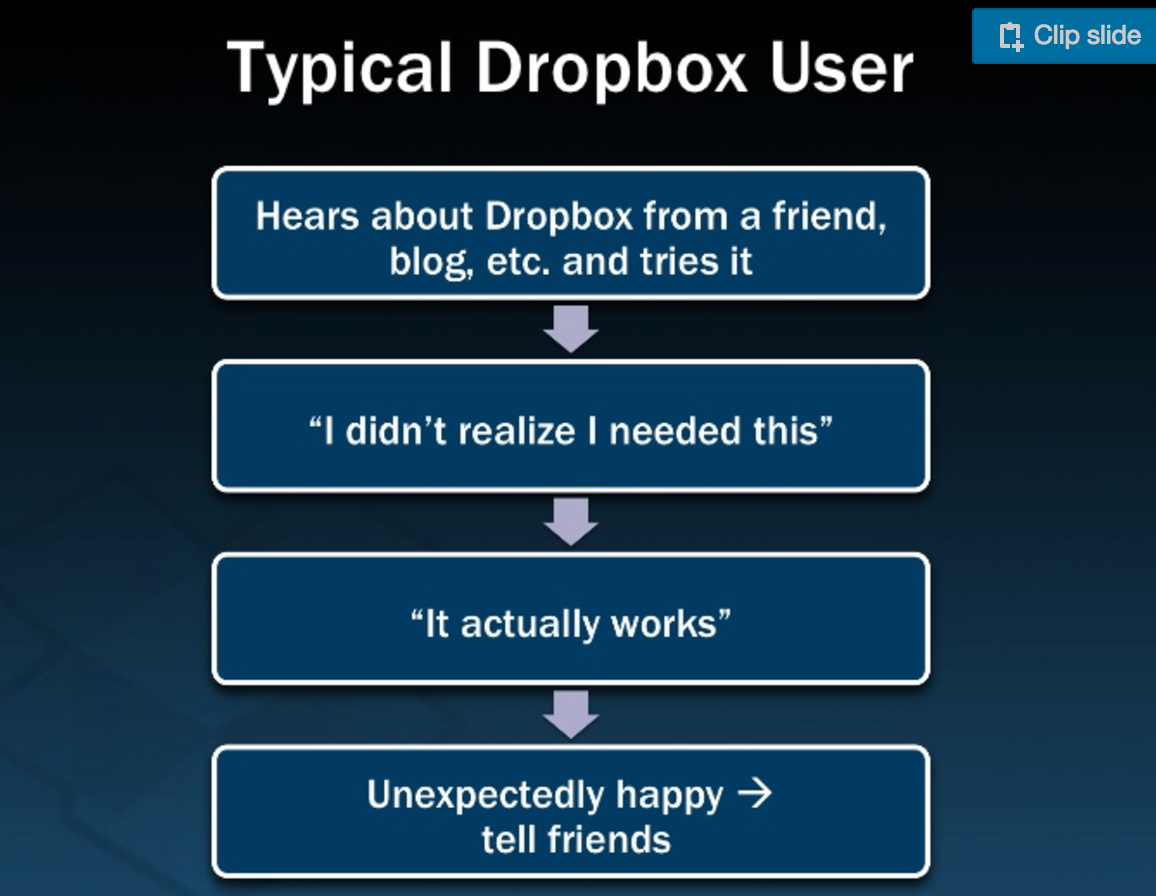
And so, their viral loop was born.
Dropbox came up with a simple idea to incentivize virality – give away free space to anyone who invited a friend to use the product.
The result? The referral program increased the company’s signups by 60%!

So now, let’s look at how you could launch a similar campaign for your eCards business.
Building Viral Loops for eCard Companies
To begin at the beginning, you have a couple of strategies to choose from when building viral loops:
The Give and Get More method offers a reward for recommending your business. Dropbox’s referral program mentioned above is a great example of this approach.
Alternatively, you could also offer Monetary Rewards for anyone who recommends your product and contributes to signing up a new user.
Or, just like Hotmail, you could structure the viral loop so that customers would spread the word on your eCard company with every card they send.
And that’s the strategy we’ll focus on in this guide.
Why? Because it’s the simplest to implement, can deliver growth at no cost, and requires little to no maintenance while still delivering results.
Often, launching this type of a viral loop involves adding a short note about the source of the card, similarly to what Hotmail did with the postscript in their emails.
Here’s how some of the eCard companies already use viral loops to propel their growth.
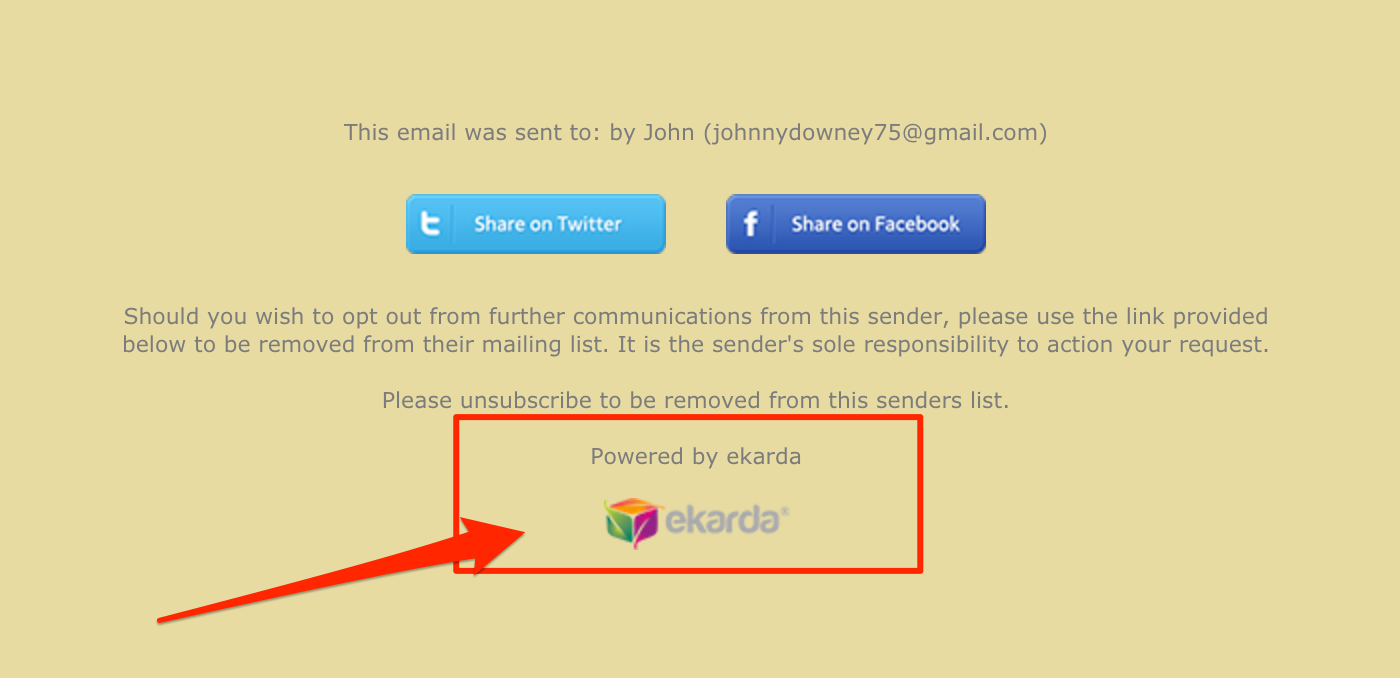
Ekarda displays a “powered by…” label on the card, followed by their logo that card recipients could click and learn more about where the card came from:
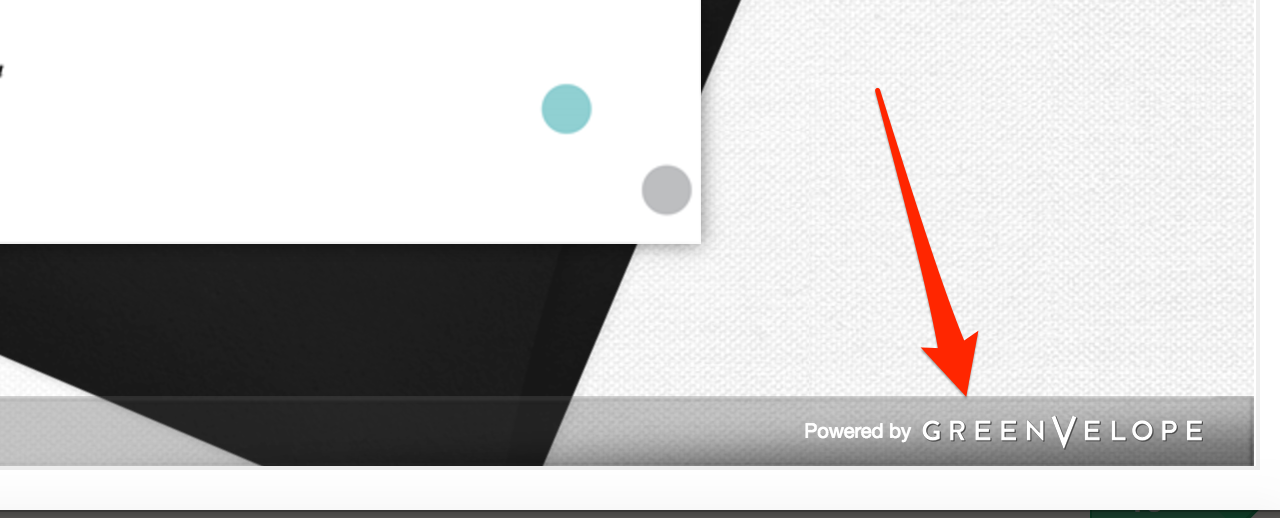
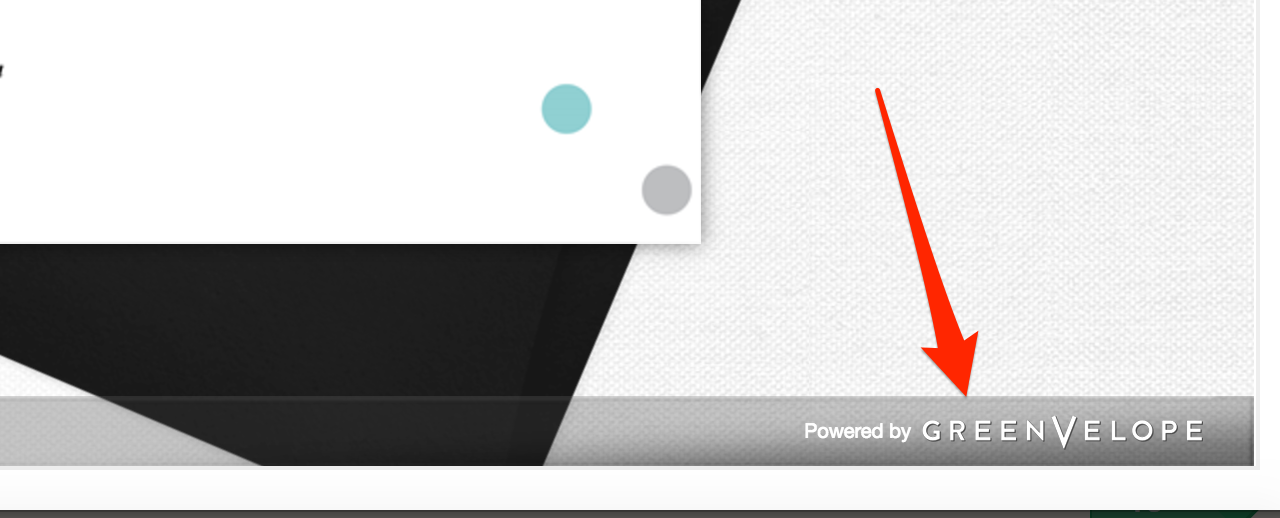
Greenvelope uses a similar strategy, however, resorts to showcasing just their logo at the bottom of the card.
JibJab, on the other hand, includes a dedicated call to action on the card’s page (users need to click a link in an email to see this page):
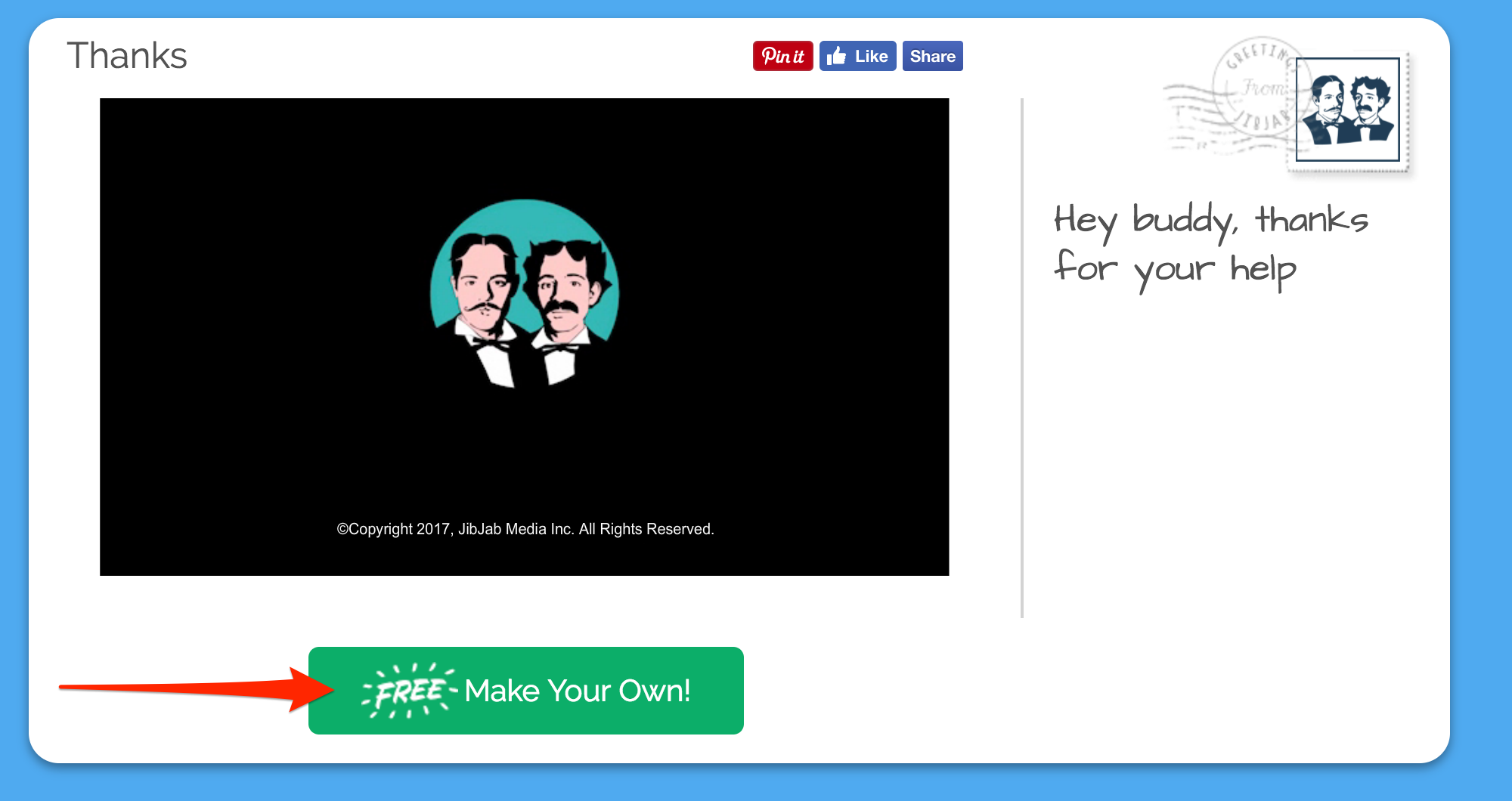
But regardless of the strategy employed, the viral loop allows the company to promote the product to every single recipient of their cards.
Now, I have to admit; I don’t have any data specific to an eCard company to illustrate how well viral loops could work for you…
…but I have something close enough.
You see, eCard companies aren’t the only ones to use this hack. In fact, many SaaS companies resort to using a viral loop to boost their growth.
Enter Intercom.
Intercom is a true sensation on the SaaS market. Since its inception, the company achieved a phenomenal growth. And as it turns out, one that is largely due to the very viral loop we’re discussing in this guide.
Just take a look at this data (courtesy of Noah Kagan from OKDork, compiled from research by Chris Von Wilpert from the Rocketship Agency)
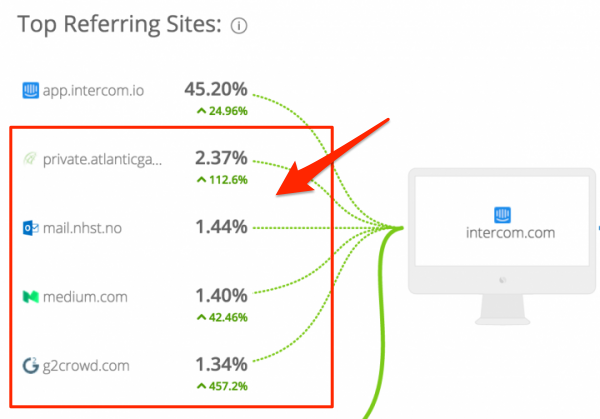
The image shows the breakdown of top referring sites, sending new traffic to the app.
The no. 1 referrer is the company itself. These are most likely users currently logged into the app who visit their website through some link in the admin panel.
It’s the other referrers that are interesting.
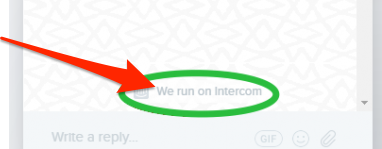
You see, as it turns out, many of those sites use Intercoms live chat product. One that features “we run on Intercom” link in every chat window!
Here, take a look:
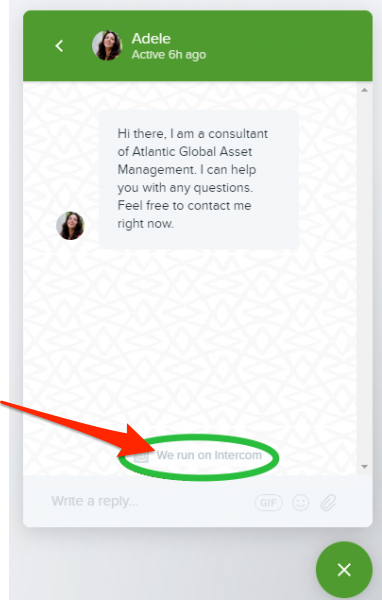
And so, every company using the Intercoms product also actively promotes it to their visitors and customers.
Here, take a look at how long it took the company to reach $100M of annual recurring revenue (compared to other giants on the SaaS market).
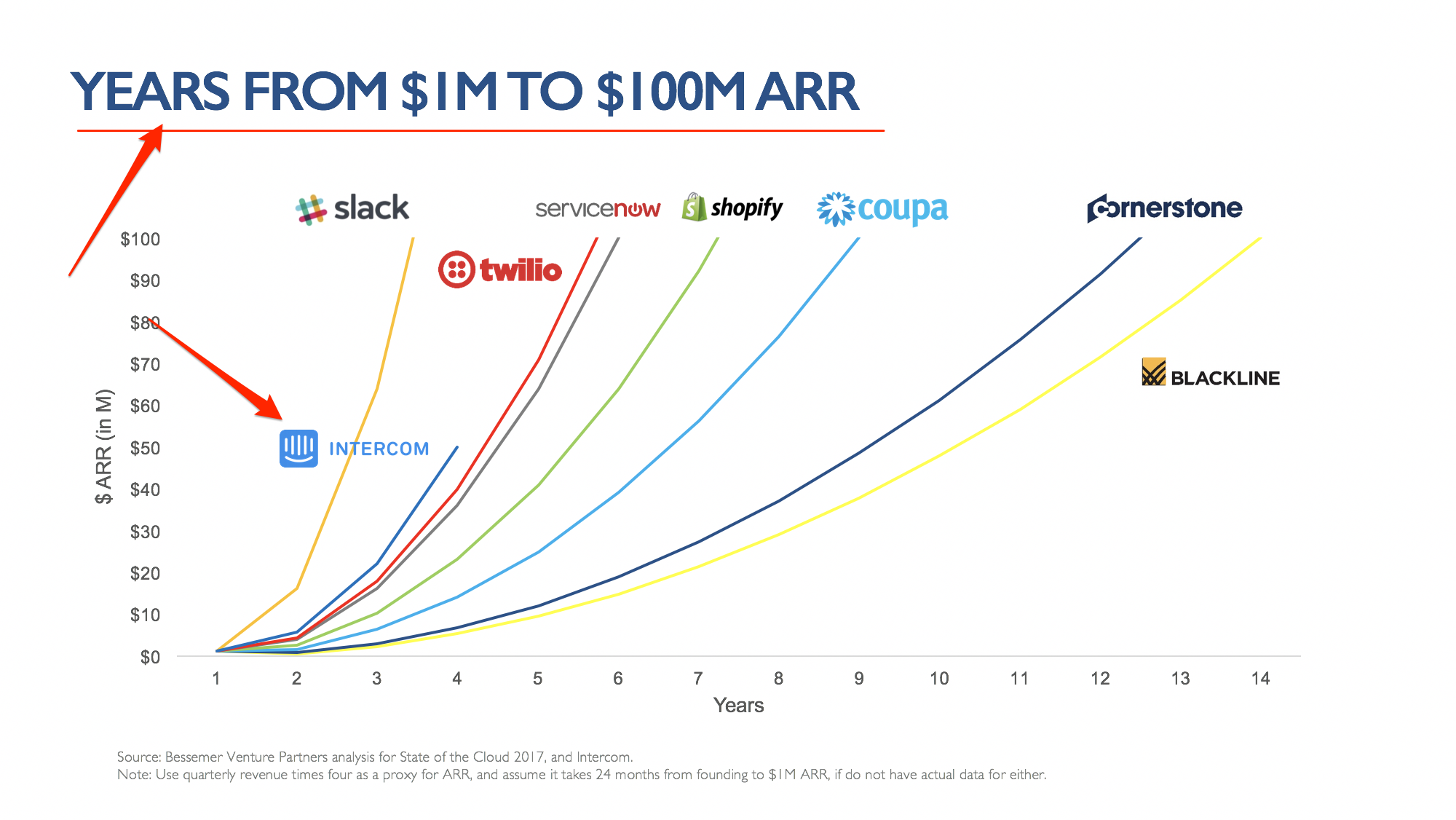
Incredible, huh?
So, here’s what you need to know if you’re wondering how to use viral loops to achieve a similar effect…
And that’s actually only one but incredibly important thing:
Your biggest challenge is to get card recipients to go and check out your product
For the most part, companies using viral loops must rely on some form of incentive to entice customers to share. Dropbox giving away free space in return for referrals is a good example here.
Many other brands offer discounts for mentioning their businesses or products to other people or even reward their users with cash for spreading the word.
But in a case of an eCard company, the virality is already there. After all, sharing lies at the core of your product.
Every time a customer sends an eCard, they can spread the word about your product.
Naturally, you can improve this process too. For example, by removing obstacles that could slow down or even deter a person from creating and sending a card.
Making it easy for them to import their address book is a good example here.
After all, how often did you get frustrated by having to take additional steps to complete a seemingly simple step in a process?
That’s why eCard companies take a particular care to simplify this step so much that their users hardly even notice it.
As a matter of fact, for one eCard company, Greenvelope, adding address book importing resulted in a boost in business (and their viral loop)!
As they admit:
“[Adding address book importing] definitely eased the import process for any number of our users to be able to point and click and authenticate with their webmail system and be able to pull a large percentage if not their entire guest list straight over into Greenvelope,”
Nonetheless, provided that you’ve optimized the process of sending a card, you don’t have to worry about enticing users to mention you to others.
The challenge, however, is in getting card recipients to act on the referral.
And so, let’s look at the elements that can make or break your viral loop.
#1. User Experience (UX)
You know, if card recipients don’t realize that you want them to try your product, there’s a great chance that they won’t.
Or if you present them with too many options, you might confuse them as to what actions you want them to take.
After all, as Jason Goldberg, the founder, and CEO of FAB.com said:
“User experience matters a lot. More than most people realize. The best designed user experiences get out of the way and just help people get shit done. Less is more. If you have to explain it, you’ve already failed.” (source)
And in this case, that “shit” would be to go and click on your call to action.
For that reason, most eCard companies keep the viral loop’s design simple.
Dead simple, in fact.
Here, take a look at some examples again:
Greenvelope uses a single call to action at the bottom right corner of the card. The company features no other element to point recipients to the source of the card.
JibJab – a single and highly prominent button placed under the card that leaves no room for interpretation as to what it is.
(Plus, the word free acts as another incentive, and overcomes a person’s objections from trying a new service.)
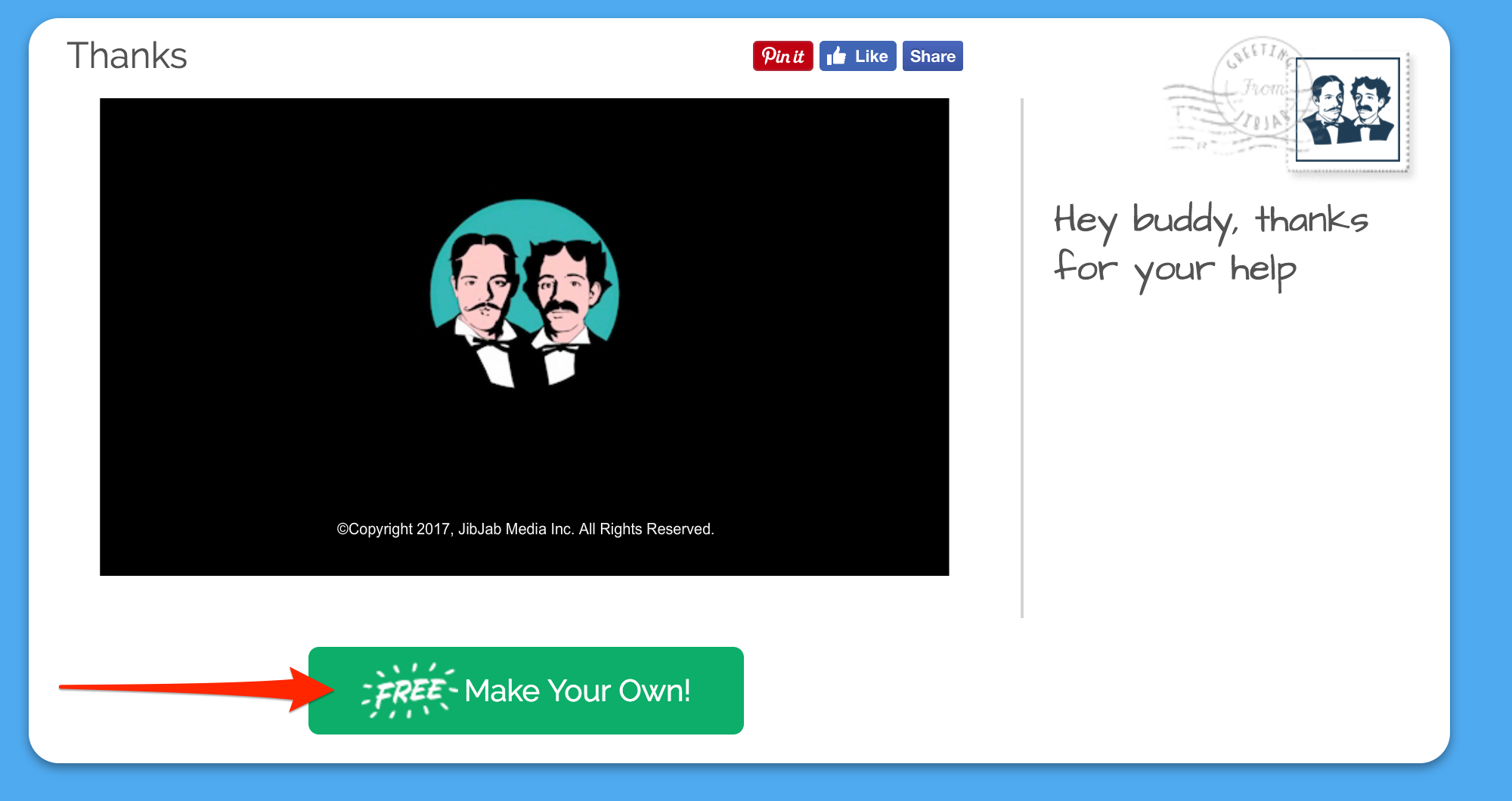
The lesson from this: Make sure that the call to action you’re going to use is simple enough for users to understand the action behind it.
(Which also brings us to the next point…)
#2. Copy
Did you know that the language you use affects how potential users will perceive you and your product?
In fact, according to Andrew Newberg, and Mark Robert Waldman, the authors of a fantastic book, Words Can Change Your Brain:
“A single word has the power to influence the expression of genes that regulate physical and emotional stress.” (source)
For example, hearing positive words activates the brain’s cognitive functioning.
But negative ones immediately activate the amygdala, the region of the brain responsible for feeling fear.
And there’s more…
Words make people feel emotions. And so, evoke the wrong emotion, and your viral efforts will go down the drain.
At the same time, for the viral loop to work, you need to entice card recipients to act on it.
So how do you do it? With a clever call to action that engages and compels them to go a check out your product.
Just take a look at some of the examples again:
Hotmail:
Intercom:
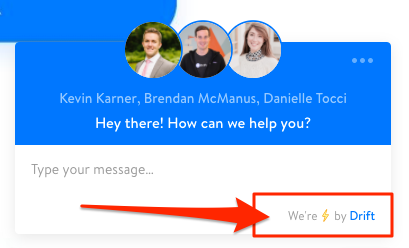
Drift:
JibJab:

Can you see what they all have in common?
All those companies use clever one liners to deliver a catchy message.
Hotmail plays on the P.S. (postscript) idea that immediately catches attention, and evokes a person’s emotions (“I love you”).
Intercom uses the word “run,” signifying not only using their software but also relying on it to achieve business’ growth (and that’s really super-clever, isn’t it?)
Drift communicates with emoji (⚡) that makes their message sound hip, easy to notice but also communicates the power of the software.
And JibJab touches users emotionally with “make your own” tagline.
The lesson from this: If you want to compel card recipients to learn more about your product, you need to engage them emotionally with a clever copy. What’s more, you need to make it short and snappy so that they wouldn’t have to spend much time reading and analyzing it.
#3. Placement
Goes without saying, doesn’t it?
Recipients can act on the call to action (CTA) only if they notice it first.
Unfortunately, there is no ideal placement for a viral loop. For the most part, you need to test how locating it in different areas of the card would affect conversions.
There are however some general principles for the call to action placement:
- Place it relatively close to any other button or action a person takes on the card.
Intercom and Drift locate their CTAs right above a user’s message window. - Leave space around it to make it more prominent. Putting the call to action too close to other elements might make it blend with the rest of the card, and in turn, become harder to notice.
- Use contrast to ensure that recipients notice your viral loop. To see what I mean, take a look at JibJab’s card again. The button is the only green element on the page, making it immediately distinguishable from anything else around it.
And finally…
Never, ever, under no circumstances use strategies that would trick people into referring or checking out your product.
I love the term Nir Eyal uses to describe a deceptive viral loop:
A Viral Oop
“A ‘viral oops’ occurs when users unintentionally invite others, but when they look back on what happened, they blame themselves, not the app.”
In the Internet circles, consciously tricking users into doing something is also referred to as a dark pattern. Specifically, the term relates to:
“[…] tricks used in websites and apps that make you buy or sign up for things that you didn’t mean to.”
You see, when using the web, we rarely read every word on a page.
Hell, for the most part, we don’t even go through the copy relating to the activity we’re taking.
We just assume what it is, and act… giving unscrupulous marketers a huge opportunity to trick us.
Because all it takes is a pre-checked checkbox to have everyone you send an eCard to added to a company’s mailing list. Or even changing the terms and conditions.
For example, take a look at this screenshot (note, this is a photoshopped version, not an original image):
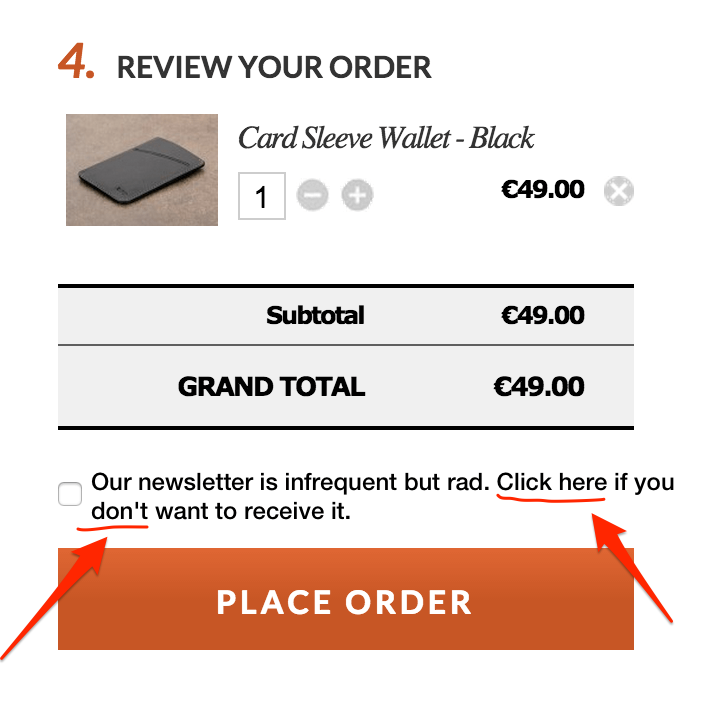
By default, companies ask us to check the box to receive something.
But what if, like in the case of the image above, they changed the copy to require the check NOT TO receive something?
Since most users would assume it’s the former rather than latter, they’d immediately get added to their mailing list…probably leaving them feeling cheated once the first email arrives.
Other dark pattern strategies include:
- Using colors users tend to respond well to deceive users to click buttons offering upgrades, or signups, rather what a person really wants.
- Changing the shape of a button to elicit a specific response
- Mislabelling buttons to confuse a person into clicking on a specific one.
(You can find more examples of dark patterns here.)
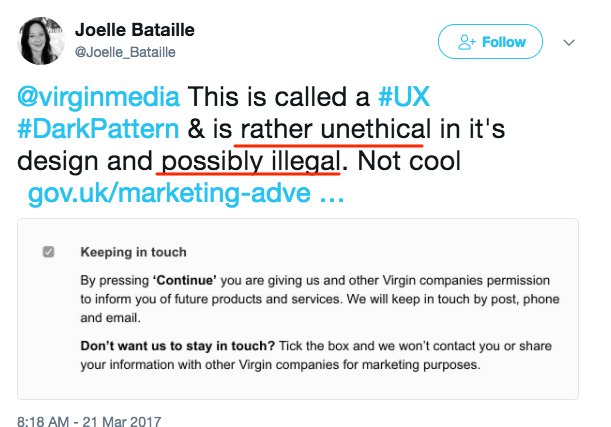
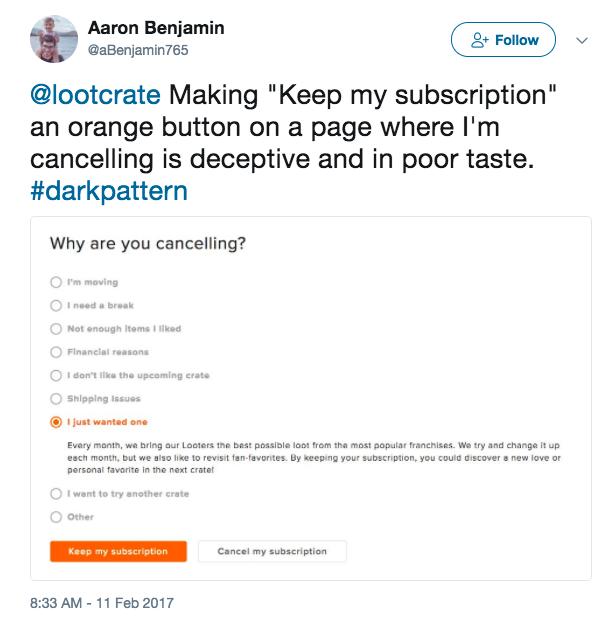
And tempting as those strategies might be, they can have a devastating effect on your company’s reputation, especially if users take it to the social media to let others about it:
Closing Thoughts
Fact: There’s no better way to grow a business than by having customers tell their friends, family, and peers about your product.
It’s just you can’t expect your customers to remember about you all the time, let alone mention your eCards to the people they encounter every day.
But you can build virality right into your product.
And hopefully, after reading this guide, you know exactly how to create and launch viral loops for your eCard company.
Next steps…
And if you want to know how viral loops work for Greenvelope, check out their case study.
Review and Audit Your Sharing Process
Download our Better Sharing Workbook Now
(it's quick, easy and absolutely free!)